Water Safety Tips for Families
Last reviewed: October 2026
Summer days at the pool, the beach or a mate's backyard make some of the best family memories. Water is also where things can go wrong quickly and quietly, so a few good habits make a big difference. Here are the water safety basics we share with every Little Fishes family, each one backed by Australia's water safety experts.
Why it matters
Drowning is a leading cause of death for Australian children aged one, two and three, and swimming pools are the most common place toddlers drown ( Royal Life Saving Australia). The good news is that things are improving. Royal Life Saving's National Drowning Report 2026 recorded 11 drowning deaths of children under five in 2025/26, 39 per cent below the 10-year average, and credits pool fencing, legislation and public education. Even so, 55 per cent of those deaths happened in backyard swimming pools ( Royal Life Saving Australia, NDR 2026 release), so there's still work to do.
1. Watch closely, every time
Supervision is the single most important thing you can do around water ( Royal Life Saving Keep Watch). For children under five, that means staying within arm's reach at all times, whatever the size of the water ( Sydney Children's Hospitals Network).
- Put your phone away while kids are in or near the water. Any distraction around young children is dangerous ( Sydney Children's Hospitals Network).
- At parties and barbecues, choose one adult to be the "Water Watcher" and swap over regularly. Never assume someone else is watching ( Sydney Children's Hospitals Network).
- Never leave a young child in the care of older children around water ( Royal Life Saving Australia).
Drowning is usually silent. It can happen in seconds, with no splashing or calling out ( Kidsafe NSW).
2. Make the backyard safe
- Pool fencing is the law in NSW. Pool owners must keep an outdoor pool surrounded by a compliant child-resistant barrier ( NSW Government). Check that the gate is self-closing and self-latching, and never prop it open ( Royal Life Saving Keep Watch).
- Clear the fence line. Move chairs, pot plants and anything else a child could climb.
- Pack toys away. Toys left in or near the pool can tempt a little one in ( healthdirect).
- Empty small water. Children can drown in nappy buckets, water tanks, fish ponds and even pets' water bowls ( Kidsafe NSW). Empty buckets and portable pools when you're done ( Royal Life Saving Australia). Inflatable pools deeper than 30 cm need to be fenced too ( Royal Life Saving Keep Watch).
3. Learn CPR, and keep it fresh
If the worst happens, starting CPR straight away can save a life. Royal Life Saving recommends updating your CPR skills every year ( Royal Life Saving Australia). CPR for babies under 12 months is different from CPR for older children, and the Sydney Children's Hospitals Network has free online modules for parents covering both ( Sydney Children's Hospitals Network). Call Triple Zero (000) in any emergency.
4. Know how to help without going in
If someone is in trouble, don't jump in after them. Royal Life Saving teaches the safest options first: talk to them, reach out with something long, or throw something that floats ( Royal Life Saving Australia). Our step-by-step guide shows how to do a reach or throw rescue.
5. At the beach
- Swim at a patrolled beach, between the red and yellow flags ( Royal Life Saving Australia and Surf Life Saving Australia).
- Teach older kids what to do if they're caught in a rip: stay calm, float, and raise an arm to signal for help ( Surf Life Saving).
- Stay in the water with young children. Waves and sandbanks can change quickly.
6. Rivers, dams and lakes
Inland waterways can hide currents, snags and sudden drop-offs. In 2025/26, 90 Australians drowned in inland waterways, including 68 in rivers and creeks ( Royal Life Saving Australia, NDR 2026 release). Check the depth before anyone gets in, never let children swim alone, and avoid alcohol around water (same source).
7. On boats
In NSW, children under 12 must wear a lifejacket at all times on boats up to 4.8 metres long, and in open areas of boats from 4.8 to under 8 metres while underway ( NSW Government). Choose a lifejacket that suits your child's weight, and wear one yourself when boating, paddling or rock fishing ( Royal Life Saving Australia and Surf Life Saving Australia).
8. Floaties aren't lifejackets
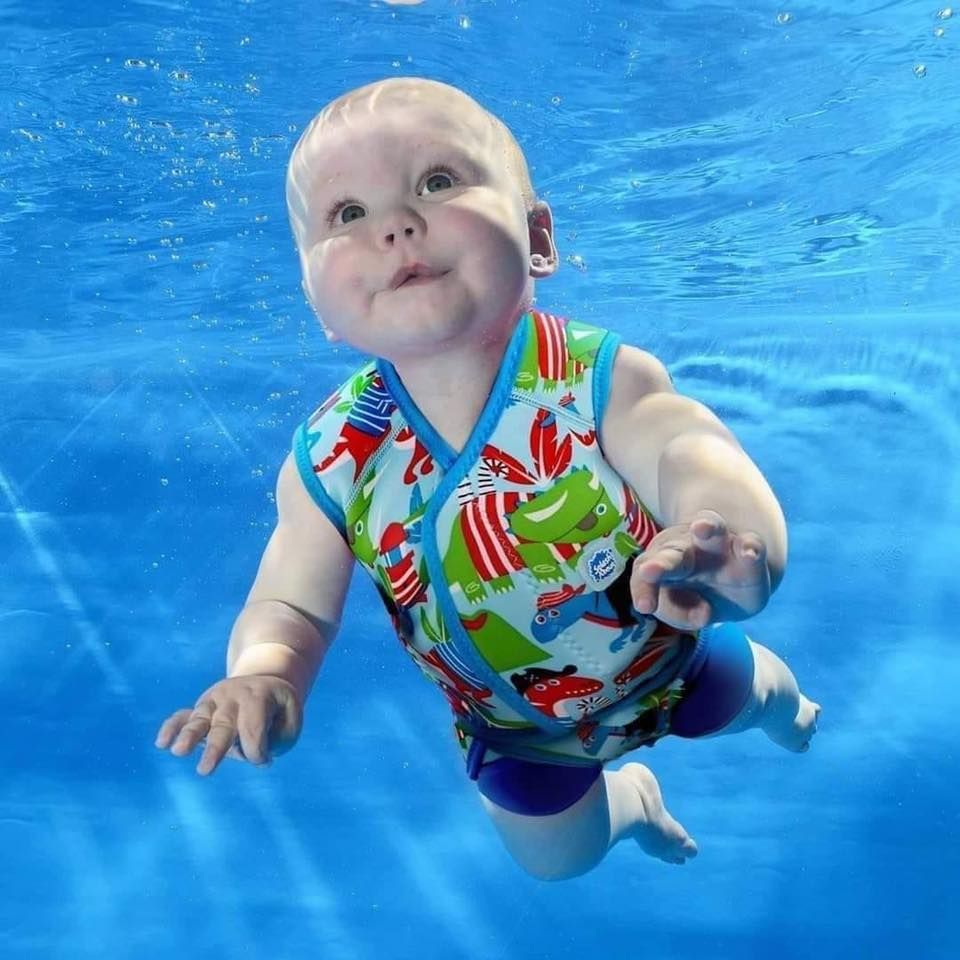
Floaties can help a child feel confident in the water, but they aren't life-saving devices and they never replace adult supervision ( Sydney Children's Hospitals Network).
9. Start swimming lessons early, and keep going
Royal Life Saving recommends water familiarisation lessons for young children, starting with gentle skills for babies from around 6 months ( Royal Life Saving Keep Watch). Lessons build water confidence and survival skills, but even a child who can swim can still drown, so supervision is always needed (same source).
Keep lessons going as children grow. By age 12, children should be able to swim 50 metres continuously and tread water for two minutes ( National Swimming and Water Safety Framework). Our guide to swimming lessons and water safety explains the benchmarks, and we offer swimming lessons from 6 months right through to beginner adults. If you live locally, you might also like our post on drowning prevention in Western Sydney.
Water safety is a skill for the whole family, and it's never too late to start.
Book a free swim trial
Little Fishes Swim School is a family owned and operated AUSTSWIM Recognised Learn to Swim Centre in Oakhurst. Lessons run all year round in our heated indoor saltwater pool. We teach babies from 6 months, children of all ages, beginner adults on Tuesday and Thursday nights, and children with additional needs through our Make a Difference program.
Book a free swim trial or call us on 02 9625 0701 .
This article is general information only and is not a substitute for accredited first aid or water safety training.
Sources
- Royal Life Saving Australia: Children aged 0 to 4 years. https://www.royallifesaving.com.au/stay-safe-active/communities/how-to-keep-children-safe/children-aged-0-to-4-years
- Royal Life Saving Australia: 313 lives lost to drowning (National Drowning Report 2026 release, 10 Sep 2026). https://www.royallifesaving.com.au/about/news-and-updates/news/2026/sep/313-lives-lost-to-drowning-as-new-report-highlights-persistent-risks-ahead-of-summer
- Royal Life Saving Australia and Surf Life Saving Australia: National Drowning Report 2026. https://www.royallifesaving.com.au/library/national-drowning-report/national-drowning-report-2026
- Royal Life Saving Australia: Keep Watch actions. https://www.royallifesaving.com.au/about/campaigns-and-programs/keep-watch/keep-watch-actions
- Royal Life Saving Australia: How to carry out a rescue safely. https://www.royallifesaving.com.au/stay-safe-active/in-an-emergency/how-to-carry-out-a-rescue-safely
- Sydney Children's Hospitals Network (NSW Health): Pool safety. https://www.schn.health.nsw.gov.au/kids-health-hub/safety-and-injury-prevention/water/pools
- Sydney Children's Hospitals Network (NSW Health): Summer water safety. https://www.schn.health.nsw.gov.au/kids-health-hub/safety-and-injury-prevention/water/summer
- Sydney Children's Hospitals Network (NSW Health): Swimming and flotation aids. https://www.schn.health.nsw.gov.au/kids-health-hub/safety-and-injury-prevention/water/swimming-and-flotation-aids
- Kidsafe NSW: Water safety. https://www.kidsafensw.org/safety/water-safety~1/
- healthdirect: Water safety for babies and children. https://www.healthdirect.gov.au/water-safety-for-babies
- NSW Government: Owning a pool or spa, your obligations. https://www.nsw.gov.au/housing-and-construction/building-or-renovating-a-home/pools-and-pool-safety/owner-obligations
- Surf Life Saving: Rip currents. https://www.surflifesaving.com.au/beach-safety/rip-currents/
- NSW Government: Children and lifejackets. https://www.nsw.gov.au/driving-boating-and-transport/waterways-safety-and-rules/lifejackets-and-safety-equipment/children-and-lifejackets
- Royal Life Saving NSW: National Swimming and Water Safety Framework. https://www.drowningprevention.org.au/industry-research-and-guidelines-1/national-swimming-and-water-safety-framework