Swimming Lessons and Water Safety: A Parent's Guide

Little Fishes Swim School team • 31 October 2026

Last reviewed: October 2026

Swimming lessons teach children practical water safety skills: safe entries, floating, turning, controlling their breathing, getting to safety and staying calm. Regular lessons also build confidence and coordination. No lesson makes a child "drown-proof", but the right skills, alongside close supervision, give children a much better chance of staying safe around pools, beaches and rivers.

Why do swimming lessons matter for safety?

Drowning can happen quickly and quietly, and it's a leading cause of death for Australian children aged one, two and three ( Royal Life Saving Australia). A child may slip into a pool, fall from a riverbank or wander into the water at the beach before an adult notices. Lessons can't remove every risk, but they can give children skills that help them respond more safely.

The most valuable learning isn't swimming laps. Over time, children learn to:

  • Recognise water hazards and follow safety rules
  • Enter the water safely and get back to the edge
  • Float, roll onto their back and control their breathing
  • Move through the water with growing strength and coordination
  • Call for help and follow simple emergency instructions

These skills take time. A child who can swim a set distance in a lesson may still tire, panic or become disoriented in an unexpected situation. That's why regular practice, close supervision and age-appropriate teaching all matter.

The national benchmarks

Australia's National Swimming and Water Safety Framework sets out what children should be able to do at ages 6, 12 and 17. For example, by age 12 every child should be able to swim 50 metres continuously and tread water for two minutes.

Many children aren't getting there. Royal Life Saving estimates that around 40 per cent of children leave primary school without meeting the benchmark for 12-year-olds ( Royal Life Saving Australia). Its newer 2025 research, based on estimates from teachers and parents, puts the figure even higher: teachers estimate that 48 per cent of Year 6 students can't swim 50 metres and tread water for two minutes, and parents estimate 46 per cent of 11 to 12-year-olds can't swim 50 metres ( Royal Life Saving Australia, 2025). Royal Life Saving notes that many children stop lessons between ages 7 and 9, before they've learned the skills that protect them as teenagers (same source). Keeping lessons going matters.

What water safety skills do children learn?

A good program builds several connected skills rather than focusing on one stroke. Lessons should be progressive, practical and suited to each child's age, experience and confidence.

Safe entries and exits

Children learn that jumping, diving or getting into unfamiliar water without permission can be dangerous. Teachers show safer ways to enter the water and how to find and hold the edge. Learning to climb out matters too, because a child may need to get out on their own.

Floating and breathing control

Floating helps a child save energy while waiting for help. Back floating, rolling from front to back and controlled breathing can reduce panic. These skills are introduced gently, so children learn they can pause, recover and regain control.

Moving towards safety

Children practise swimming short distances, turning around and reaching the wall. As they get stronger, they swim further and learn different strokes. The goal is useful movement: getting out of trouble, finding a safe spot and staying calm.

Calling for help, safely

Children should know not to go into the water to rescue someone else. Instead, they can alert an adult, call for help and, where it's safe, reach or throw something from the edge. Royal Life Saving lists talking, reaching and throwing as the safest forms of rescue ( Royal Life Saving Australia).

When should children start?

There's no single perfect age. Royal Life Saving recommends water familiarisation classes for young children, with gentle skills for babies from around 6 months, then water confidence for preschoolers ( Royal Life Saving Keep Watch). Older children build independent swimming, survival skills and stroke technique.

Starting early helps a child get used to water before fear sets in, but starting later is still worthwhile, and it's never too late for adults either. At Little Fishes we offer learn-to-swim programs for every age:

  • Baby classes from 6 months, with a parent in the water
  • Preschool classes that build independence and water awareness
  • School-age lessons for swimming ability, safety and technique
  • Advanced lessons for stronger swimmers building endurance and strokes
  • Beginner adult classes on Tuesday and Thursday nights
  • Our Make a Difference program for children with additional needs

We have also run school swimming programs with local schools for many years.

How often should children have lessons?

Consistency matters, because water skills rely on memory, coordination and confidence. A regular weekly lesson lets children revisit skills, get feedback and keep progressing. Long gaps can mean time spent rebuilding confidence. The best routine is one your family can keep up, and regular attendance is generally more useful than short bursts followed by long breaks. Our FAQs answer common questions about getting started.

Why is supervision still essential?

Lessons are one layer of protection. Royal Life Saving's Keep Watch program asks parents to use four actions together: supervise, restrict access to water, teach water safety skills and learn how to respond in an emergency ( Royal Life Saving Keep Watch). Even a confident swimmer needs an adult watching, because conditions change and children tire or take risks.

Parents and carers should:

When several adults are around, nominate one person to watch rather than assuming someone else is. For more, see our water safety tips for families.

How do lessons build confidence as well as safety?

Fear can affect a child's ability to listen, breathe and move in the water. Supportive lessons introduce skills in small steps, so children experience success without pressure. Confidence doesn't mean taking risks. It means understanding what you can do and making safer choices.

At Little Fishes in Oakhurst, lessons take place in our heated indoor saltwater pool. The warm water helps babies, children, beginner adults and swimmers with additional needs relax and focus.

Strokes and survival swimming

Strokes like freestyle and backstroke help swimmers move efficiently and build strength and endurance. Survival skills matter just as much for unexpected situations. A balanced program may include:

  • Floating and recovery positions
  • Treading water, where appropriate
  • Swimming in clothes, at suitable stages
  • Turning and changing direction
  • Reaching the edge or an exit point
  • Resting and breathing without panic

These should be taught by qualified teachers in a controlled setting. Children should never be put in frightening situations to test them.

Swim schools and parents work best as a team

A swim school teaches the skills. Parents supervise, practise safe habits and encourage. Talk positively about lessons, praise effort, and reinforce simple rules such as always asking before going near water. If you visit a pool, choose activities that match your child's ability and keep watching closely.

When choosing a swim school, look for qualified, caring teachers (for example, AUSTSWIM), a clear program with visible goals, a strong focus on water safety, and good communication about progress. It's also fair to ask how teachers support nervous children and children with additional needs.

Frequently asked questions

Can swimming lessons prevent drowning?

Lessons teach valuable water safety and survival skills, but they can't guarantee a child won't drown. Even a child who can swim can still drown, so there's no substitute for supervision ( Royal Life Saving Keep Watch).

Are swimming lessons useful for toddlers?

Yes. Toddler lessons build water familiarity, safe routines, movement and confidence. They should be gentle, age-appropriate and supported by a parent or carer.

What if my child is afraid of water?

Tell the teacher before the lesson. A patient teacher uses small steps, clear explanations and lots of encouragement. Forcing a child can make fear worse.

How long does it take a child to learn to swim?

It varies with age, attendance, coordination, confidence and experience. Regular lessons and realistic goals help children progress steadily.

Do confident swimmers still need supervision?

Yes. Ability doesn't remove risks such as tiredness, unfamiliar water or unexpected falls. Active adult supervision is always needed.

Key takeaways

Swimming lessons help children learn to float, move, breathe, recover and reach safety, and they teach respect for the water. The strongest protection combines regular, age-appropriate lessons with close supervision, a secure pool fence and adults who know CPR. If you're comparing swimming lessons in Oakhurst or Western Sydney, choose a supportive program that puts water safety first.

Book a free swim trial

Little Fishes Swim School is a family owned and operated AUSTSWIM Recognised Learn to Swim Centre in Oakhurst. Lessons run all year round in our heated indoor saltwater pool. We teach babies from 6 months, children of all ages, beginner adults on Tuesday and Thursday nights, and children with additional needs through our Make a Difference program.

This article is general information only and is not a substitute for accredited first aid or water safety training.

Sources

  • Royal Life Saving Australia: Children aged 0 to 4 years. https://www.royallifesaving.com.au/stay-safe-active/communities/how-to-keep-children-safe/children-aged-0-to-4-years
  • Royal Life Saving NSW: National Swimming and Water Safety Framework. https://www.drowningprevention.org.au/industry-research-and-guidelines-1/national-swimming-and-water-safety-framework
  • Royal Life Saving Australia: 40% of children are missing water safety benchmarks (media release, 28 Oct 2024). https://www.royallifesaving.com.au/utility-navigation/media-centre/media-releases/media-release-40-of-children-are-missing-water-safety-benchmarks
  • Royal Life Saving Australia: Decline in swimming skills puts lives at risk (Children's Swimming and Water Safety Skills research, 18 Mar 2025). https://www.royallifesaving.com.au/about/news-and-updates/news/2025/mar/decline-in-swimming-skills-puts-lives-at-risk
  • Royal Life Saving Australia: How to carry out a rescue safely. https://www.royallifesaving.com.au/stay-safe-active/in-an-emergency/how-to-carry-out-a-rescue-safely
  • Royal Life Saving Australia: Keep Watch actions. https://www.royallifesaving.com.au/about/campaigns-and-programs/keep-watch/keep-watch-actions
  • Sydney Children's Hospitals Network (NSW Health): Pool safety. https://www.schn.health.nsw.gov.au/kids-health-hub/safety-and-injury-prevention/water/pools
  • Sydney Children's Hospitals Network (NSW Health): Swimming and flotation aids. https://www.schn.health.nsw.gov.au/kids-health-hub/safety-and-injury-prevention/water/swimming-and-flotation-aids
  • NSW Government: Owning a pool or spa, your obligations. https://www.nsw.gov.au/housing-and-construction/building-or-renovating-a-home/pools-and-pool-safety/owner-obligations
  • AUSTSWIM. https://www.austswim.com.au

Recent Posts

Smiling child swimming underwater with arms outstretched in a blue pool
by Little Fishes Swim School team • 31 October 2026
Thinking about baby swimming lessons? What to look for, what happens in class, starting from 6 months, and booking a free trial in Oakhurst.
Child swimming underwater with arms outstretched and smiling in a blue pool
by Little Fishes Swim School team • 31 October 2026
Water safety, fitness, confidence, fun and a skill for life: five reasons for kids and adults to learn to swim, incl. beginner adult classes.
Child swimming underwater with arms outstretched and smiling in a blue pool
by Little Fishes Swim School team • 31 October 2026
What to expect at your preschooler's first swimming lesson at Little Fishes in Oakhurst: warm water, gentle skills and tips for nervous kids.
Child swimming underwater with arms outstretched and smiling in a blue pool
by Little Fishes Swim School team • 31 October 2026
Little Fishes runs lessons all year, not in school terms, so your child can keep swimming through the summer holidays. Heated indoor pool, Oakhurst.
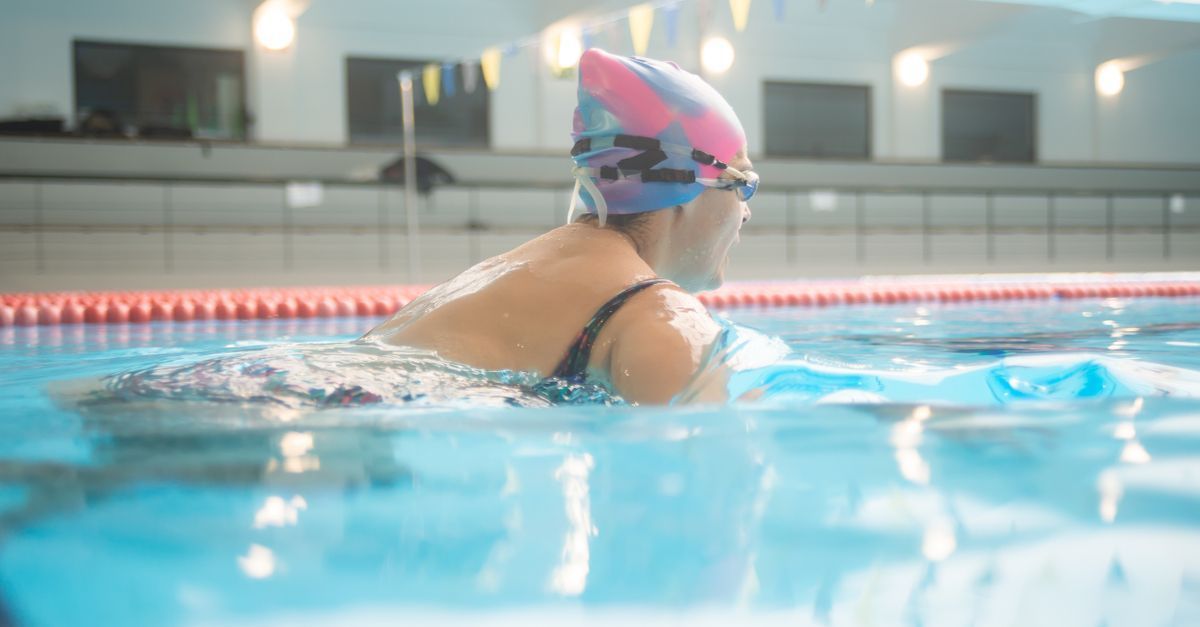
Adult learning to swim in an indoor heated pool
by Matthew Gobbo • 31 October 2026
Beginner swimming lessons for adults on Tuesday and Thursday nights at our warm indoor pool in Oakhurst, near Blacktown. Small, friendly classes.
Child in goggles floating in a blue swimming pool, arms raised and smiling.
by Matthew Gobbo • 31 October 2026
Private swimming lessons for children with additional needs at our warm indoor pool in Oakhurst, near Blacktown and Mount Druitt. Enquire via our form.
Child swimming underwater in a blue pool, wearing pink goggles and a pink swimsuit, arms outstretched.
by Little Fishes Swim School team • 31 October 2026
Is your child crying at swimming lessons? Seven gentle, practical ways to help them settle, from Little Fishes Swim School in Oakhurst, Western Sydney.
Child underwater in a pool, smiling and wearing blue goggles while reaching toward the camera
by Little Fishes Swim School team • 31 October 2026
A checklist for your child's first swimming lesson at Little Fishes in Oakhurst: swimwear, swim nappy, towel, warm clothes and tips for a calm start.
Baby in a colorful swim vest floating underwater in a blue pool, looking upward.
by Little Fishes Swim School team • 31 October 2026
Missing a lesson at Little Fishes? How to mark an absence and book a make-up class in the iClassPro app or Parent Portal, step by step.

Birthday party table with rainbow decor, cakes, and trays of sweets, with children gathered around
by Little Fishes Swim School team • 31 October 2026
Plan a kids' pool party at our warm indoor pool in Oakhurst, Western Sydney. See our Bronze, Silver and Gold packages from $600, plus booking tips.
Show More